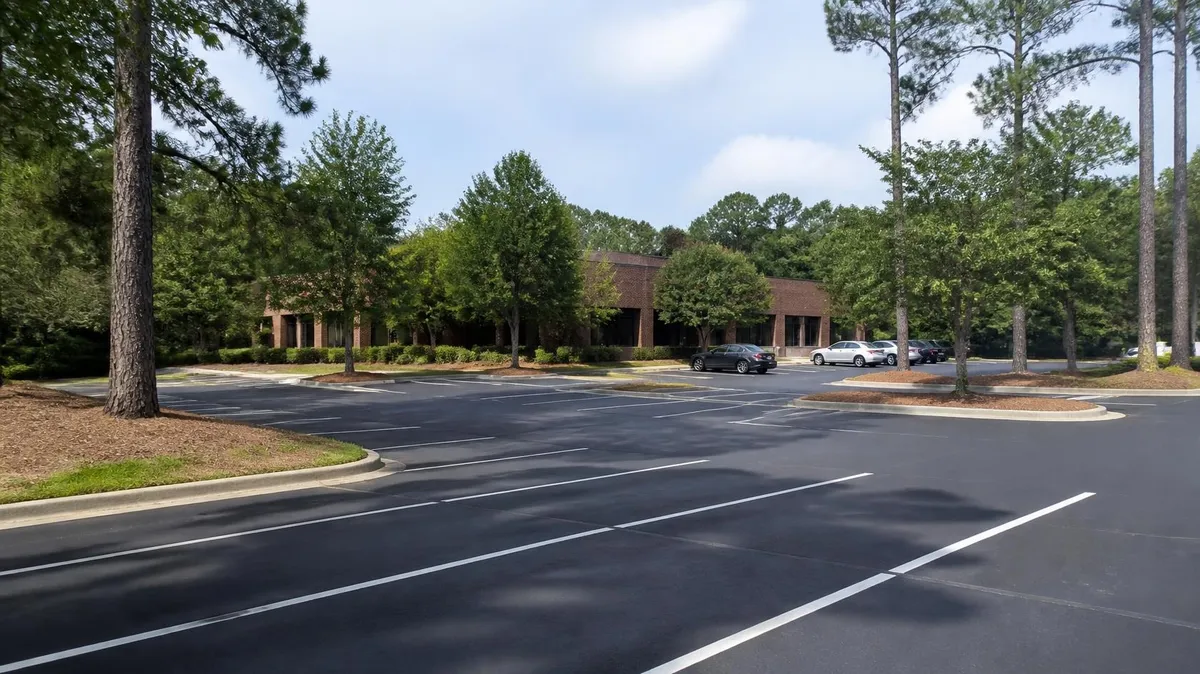
Metro Atlanta · Commercial asphalt
In Atlanta, rain works on a lot from below and sun from above
A parking lot in this region spends the summer softening under long hot afternoons and the rest of the year soaking up storm water through every crack it has. The surface tells you which of those two forces is winning, if you know how to read it. This site connects commercial property owners and managers with an asphalt contractor who walks the lot, reads it with you, and sets the scope and cost from what is actually there.
How Piedmont ground, storms and sun wear down a lot
Think of a commercial lot as three layers doing three different jobs. The asphalt on top keeps water out and takes the scuffing of tires. The crushed stone base under it spreads each wheel load over a wider patch of ground. And under the stone sits the subgrade, which across most of metro Atlanta is Piedmont soil: the red clay and silty, mica-flecked material that has weathered in place over decomposed rock.
That soil is firm enough when it stays reasonably dry. Saturate it and it loses much of its ability to hold anything up. It also drains slowly, so water that gets down to it tends to stay there for days after a storm has passed. Nearly every structural failure on a lot here starts with that simple sequence: water finds an opening, travels down through the stone, and softens the clay the whole system rests on.
The region supplies plenty of water to try. Roughly fifty inches of rain fall in a typical year, spread across every season, and a summer thunderstorm can drop a great deal of it in under an hour. On a hilly site, runoff concentrates quickly and runs along curb lines and pavement edges, exactly where the asphalt is weakest.
Heat is the second force. Asphalt binder is a thermoplastic, so on a long run of afternoons in the 90s the pavement surface gets hot enough to deform under heavy, slow, or stationary loads. Meanwhile the sun works on the binder chemically. Ultraviolet light and oxygen harden it year after year until the surface turns gray, loses its flexibility, and starts to crack and shed stone. Occasional hard cold snaps add some stress in the winter, but on this ground, water and heat do most of the damage.
What the lot is telling you
Each kind of distress points to a cause, and the cause decides whether the fix is routine upkeep or a rebuild. Walking the property with that in mind, before any proposal arrives, is the cheapest way to avoid paying for the wrong repair.
Rutting and shoving where vehicles stop and turn
Check where cars brake before a stop sign, where trucks swing toward the docks, the drive-through lane, and the spot where a dumpster truck sets its front forks down. Grooves along the wheel paths, washboard ripples, or asphalt pushed up into a ridge all mean the mix moved while it was hot. Sometimes the mix itself was too soft for the traffic it carries. Sometimes the base beneath has settled and the surface is simply following it down. A contractor can usually tell the two apart by cutting a core or opening a test area.
Alligator cracking and potholes after a stormy stretch
Cracks that join into small interlocking pieces, like the pattern on a reptile hide, mean the pavement is flexing because the support underneath has gone soft. It usually shows up first in drive aisles and low spots that hold water. Once those pieces start to loosen, a few heavy rains and some traffic will pop them out, and a pothole appears seemingly overnight. Filling the hole does not restore the base. The durable repair removes the failed area down to firm material, corrects the base, and rebuilds the section.
A gray, brittle, raveling surface
When the lot has faded from black to pale gray and loose stone collects along the curbs, the binder at the surface has oxidized. Fine, irregular cracks and a rough, sandpaper texture tend to come with it. This is an aging surface rather than a failing structure, provided the lot still feels solid underfoot and water drains away. It is one of the conditions where sealcoating and crack sealing make real sense, and where a thin mill and overlay can be the next step once the wear goes deeper.
Edge breakup and root heave along the tree line
Atlanta is famous for its tree canopy, and trees near pavement show their presence in three ways. Roots lift and crack the asphalt near planting islands and the perimeter. Shade keeps some areas damp long after the rest of the lot has dried. Leaves and pine straw clog inlets, so storm water backs up and sits on the pavement. Where an unsupported edge meets eroded soil or a washed-out grass strip, the asphalt breaks off in chunks because nothing holds it in place from the side.
Patches that keep failing in the same spot
A patch that has been replaced two or three times is a clue, not just a nuisance. Something keeps delivering water to that location: a downspout emptying onto the pavement, a clogged drain, a low spot with no outlet, or groundwater seeping out of a cut slope. Until that source is found and dealt with, each new patch will follow the one before it. The fix is usually a drainage change made alongside a deeper repair.
Request a site walk
Send the property address and a few words on what the pavement is doing. A reply comes back to arrange a call.
Talk through your site
A walk around the lot after a heavy rain shows most of what matters. Send the address and a rough idea of the paved area, and a contractor can take it from there.
How the work divides into six kinds of service
Commercial asphalt work falls into a few broad categories, and a good proposal often combines several of them. New paving and full reconstruction start from the subgrade and are the answer when the base has failed across most of the lot. Parking lot repair and asphalt repair cover cutting out failed sections, fixing the base beneath them, patching potholes, and rebuilding edges, while the rest of the property stays in use. Milling and resurfacing grind off a worn top layer and replace it, which renews the surface without disturbing a base that is still sound. Sealcoating and crack sealing protect a healthy surface from sun and water. Striping restores stall lines, arrows, fire lanes, crosswalks and accessible parking markings once the surface work is done.
Parking Lot Paving
New lots and full reconstruction, starting with the clay underneath.
Parking Lot Repair
Sorting an occupied lot into what has to happen now and what can wait.
Asphalt & Pothole Repair
Reading ruts, potholes and cracking back to the cause before choosing a fix.
Sealcoating & Crack Sealing
Protecting binder from Georgia sun, and the limits of what a coat can do.
Milling & Resurfacing
Mill and overlay versus stacking another layer on top of the curbs.
Parking Lot Striping
Re-planning layout and flow instead of repainting old lines.
Spend in the order the pavement needs it
Money wasted on commercial pavement is rarely spent on poor work. More often, sound work was done in the wrong order, so the lot looks fine for a season and then fails on the same schedule it was already on.
- Sort out drainage first. Find where water runs, where it stands, and which inlets, gutters and downspouts are sending it onto the pavement.
- Rebuild what has failed structurally: alligatored areas, potholes, rutted turning zones, and any section sitting on softened clay.
- Seal the cracks that are still just cracks, so the next summer of storms cannot reach the base through them.
- Treat the surface last. Sealcoating and overlays improve protection and appearance. Neither one adds strength to a weak base.
Reversing the second and fourth steps is the costly version of this mistake. New asphalt laid over a failing base reflects the old cracks through within a season or two, and the eventual repair has to cut through both layers.
How to compare proposals that look nothing alike
Bids on the same lot can be far apart, and none of them needs to be dishonest for that to happen, because each bidder may be pricing a different job. Pin down the scope before comparing numbers, or the lowest figure wins by default and the gap comes back later as a change order.
A proposal worth comparing states these things plainly:
- Every area of work, marked on a site plan, with square footage for each method: full-depth repair, mill and overlay, patching, sealcoat, striping.
- The finished asphalt thickness and how many lifts it will be placed in.
- Whether the existing base is being reused, reinforced or replaced, and to what depth.
- What is being done about drainage and where the water will go afterward, including any inlet or curb work.
- The order of work, which areas close on which days, and how traffic, deliveries and pedestrians will be routed around them.
- Cure times before each area can take cars, before striping can go down, and before heavy trucks return.
- What is excluded, and what conditions found during the work would change the scope.
A proposal that addresses all of that describes a job. One that only quotes a single rate for the whole lot leaves the real conditions to be discovered once the crews and machines are already on site, and that discovery is rarely in the owner's favor.
Scheduling around Atlanta weather
Hot-mix paving can run through much of the year in Georgia, which gives property managers more room than they would have further north. The limits come from particular weather patterns rather than a short season.
Summer afternoon storms are the most common interruption. Crews generally avoid placing asphalt on a wet base or in rain, and a storm that arrives mid-shift can end the day early. Morning starts and a flexible calendar for the second half of a project help. Summer heat has its own cost: freshly placed asphalt stays soft longer on a hot day, so an area may need more time closed before it can handle turning traffic or parked vehicles.
Winter brings cool, damp spells that slow everything down. Asphalt loses heat quickly when the air and ground are cold, which shortens the window to compact it properly. Sealcoating and striping are even more sensitive, because they need warmth, dry pavement and several dry hours to cure. A plan that puts structural repairs and paving in cooler, drier months and leaves sealing and striping for a stable stretch of warm weather usually runs with the fewest surprises.
On an occupied property, phasing is often the bigger constraint. Decide in advance which areas close on which days, how accessible parking and routes remain available, how refuse pickup and deliveries will work while a dock or enclosure is out of use, and how tenants will be told. People accept closures they were warned about and complain about the same closure when they were not.
Inside and around the Perimeter
This property serves commercial lots across metro Atlanta, inside and around the Perimeter. Most requests come from four parts of the region, each with its own mix of office parks, retail centers, apartment communities, churches, schools and warehouse properties along the interstate corridors. Soils, slopes and tree cover vary from site to site within each one, so the walk matters more than the ZIP code.
Cobb County
Marietta, Kennesaw and Smyrna lots cut into hillsides, where water decides everything.
Gwinnett County
Truck courts and loading aprons along the I-85 corridor.
North Fulton
Campuses, apartments and HOAs under heavy tree canopy.
DeKalb County
Older lots carrying decades of overlays and patches.
Atlanta parking lot questions, answered plainly
Why do ruts and ridges show up after a hot summer?
Asphalt softens as it heats, and on long afternoons in the 90s a heavy or slow-moving load can push it around. That is why grooves and ridges gather at stop bars, drive-through lanes, loading approaches and dumpster pads. Sometimes the mix was too soft for the traffic. Other times the base under it has settled. A contractor can core or open the area to find out which one it is.
Why do potholes appear right after a run of thunderstorms?
Heavy rain gets into cracks and down to the Piedmont clay beneath the stone base, and that clay loses strength once it is soaked. The pavement over it starts flexing, cracks into small interlocking pieces, and traffic then plucks those pieces loose. The hole is the last stage of the failure. A lasting repair removes the soft material, rebuilds the base, and deals with whatever is sending water there.
The trees along our lot are lifting the pavement. What can be done?
Root heave usually shows up as raised, cracked asphalt near islands and along the property edge. The repair generally means removing the lifted section, dealing with the roots under it where that is appropriate, and rebuilding the base and surface. Anything involving large or protected trees may call for an arborist's advice first. Clearing leaves and pine straw from inlets helps too, since clogged drains leave water standing on the pavement.
Can the property stay open while the work is done?
In most cases, yes, with a phasing plan agreed in advance. Patching and section repairs can be taped off one area at a time while the rest of the lot runs normally. Milling, overlays and full reconstruction usually take out larger zones, so entrances, accessible parking, delivery access and refuse pickup need a plan for each day. Tell tenants and visitors the schedule early and in writing.
How long before cars can drive on new asphalt, and when can it be striped?
Fresh asphalt can usually take light traffic once it has cooled, which on a hot day takes longer than people expect. Sharp turns, parked vehicles and heavy trucks should wait longer. Sealcoat needs dry, warm weather and time to cure before traffic or paint goes on it. Ask the contractor for written reopening times for each area, since they depend on the material and the weather that day.
When does rebuilding the lot make more sense than repairing it?
When structural failure has spread across a large share of the pavement rather than a few pockets, repeated patching stops making sense. Warning signs include alligator cracking across most drive aisles, widespread rutting, standing water in many places, and patches failing faster than they can be replaced. At that point reconstruction, with the base and drainage corrected, usually gives a better result than another round of spot repairs.
How do we compare bids that are very far apart?
Ask each bidder to mark their work areas on a site plan and give square footage for each method, whether full-depth repair, overlay, patching, sealcoat or striping. Have them state asphalt thickness, number of lifts, base depth, drainage work, phasing and cure times. Once the scopes sit side by side, the gap usually turns out to be different jobs, not different prices for the same one.
Talk through your site
Send the address, a rough size for the paved area, and what has changed on the lot this year. Photos of rutted turns, repeat patches, and anywhere water stands after a storm help the contractor most.