Home › Services
Milling and resurfacing: taking pavement off before putting it back
A worn parking lot can be resurfaced three ways, and the cheapest-looking one often causes problems that show up years later at the curb line, the building entrance and the storm inlets. Milling is the step that decides whether a new surface fits the site it sits on or slowly buries it.
Three ways to renew a worn surface
When the wearing course of a lot is oxidized, raveling and cracked but the base underneath still carries traffic, an owner usually hears three options. A straight overlay places a new layer of hot mix directly on top of the old surface. A mill-and-overlay first grinds away a set depth of the old asphalt, then replaces it with new mix so the finished grade ends up close to where it started. Full-depth reconstruction removes the pavement and repairs or rebuilds the aggregate base before any new asphalt goes down.
These are not good, better and best versions of one job. Each one answers a different condition. The overlay adds thickness and height. Milling trades height for a fresh surface. Reconstruction fixes support. Choosing between them starts with two questions: is the failure in the top layer or below it, and can the site afford to get any taller?
Why stacking overlays slowly buries a property
Every overlay placed without milling raises the pavement by the thickness of the new layer. One lift rarely matters. Two or three over the life of a property add up, and the curb, the gutter, the sidewalk ramps, the drainage inlets and the door thresholds stay where they were built.
The first casualty is curb reveal, the exposed face of the curb above the pavement. A curb that once stood tall enough to channel water and stop a rolling tire gradually shrinks to a small lip. Once reveal is gone, runoff that should travel along the gutter spills over the curb line and across landscaped islands, sidewalks and entries.
Drainage is the second casualty. Inlet grates end up sitting low in a dish of new asphalt, or the surrounding pavement is feathered down in a way that leaves ponds just short of the opening. On sloped Piedmont sites, where a heavy afternoon storm sends concentrated sheets of water downhill, a few inches of lost grade can redirect flow toward a storefront or a building wall instead of the structure meant to catch it.
The third is at the doors. Pavement that climbs toward a threshold leaves a raised edge where a walkway meets the lot, or a lip at a building entrance where the asphalt now sits above the slab. Those small vertical edges catch toes, cart wheels and walkers, and they can interfere with the accessible route that the property owner is expected to keep usable.
What milling does, and what happens to the millings
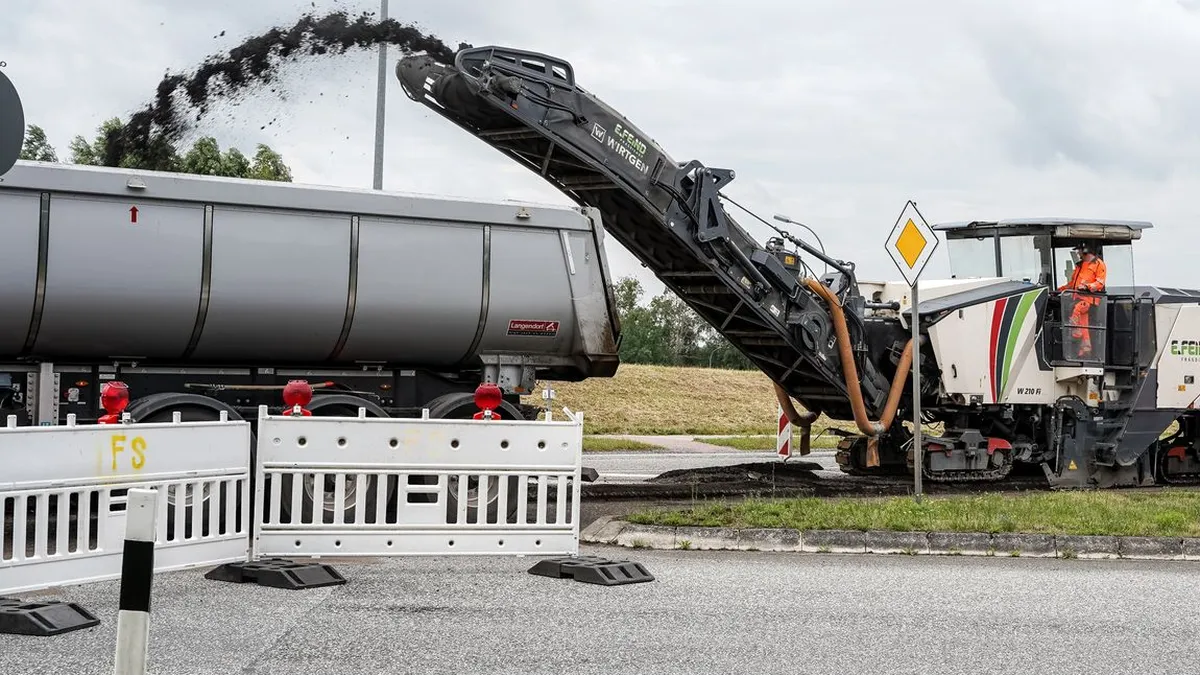
A cold milling machine uses a rotating drum fitted with carbide teeth to grind asphalt away to a controlled depth. Grade controls on the machine follow a reference, such as a curb line or a stringline, so the cut can be held to a consistent depth or deliberately varied to correct slope. The machine leaves a textured, grooved surface that gives the new layer something to grip.
Along curbs and gutters, milling is how the original reveal comes back. The contractor cuts down alongside the concrete so the new surface finishes at the intended height below the curb top, and water once again follows the gutter to the inlet. Around structures and at entrances, the same approach brings the finished grade back below thresholds and flush with walks.
The ground asphalt, called millings or reclaimed asphalt pavement (RAP), is not waste. It is conveyed into trucks and hauled away, where it is commonly screened and blended into new hot mix, used as a base or sub-base material, or stockpiled for surfacing gravel lots and access drives. Aged binder in RAP still has value, and asphalt is among the most recycled construction materials in the country. A proposal should say who keeps the millings and where they go, since hauling is part of the job either way.
Tack coat: how the new layer holds on to the old one
A milled surface is dusty, and new asphalt placed on dust sits on top of the old pavement rather than adhering to it. Two layers that are not stuck together behave as separate thin slabs. Under turning trucks and braking cars, the top layer can slip, crack in crescent shapes, or peel away in sheets, especially on hot summer days when the mix is soft.
The fix is simple but easy to skimp on. After milling, the surface is swept thoroughly, often with a power broom and then a blower, to clear loose fines from the grooves. Then a tack coat, a thin, even application of asphalt emulsion, is sprayed across the entire area, including the vertical faces along curbs and against existing pavement edges. The emulsion is allowed to break, turning from brown to black, before paving begins. Streaky, puddled or missing tack is visible if someone walks the area just before the paver arrives.
When milling is the wrong answer
Milling renews the top of a pavement. It does nothing for the base or the subgrade. If the lot shows alligator cracking in interlocking patterns, soft spots that flex under a loaded truck, potholes that keep reappearing in the same place, or ruts deep enough to hold water, the problem is support, not surface. In metro Atlanta that usually traces back to rainwater reaching the base and saturating the red clay underneath, which loses strength when wet.
Placing a fresh layer over failed support produces a surface that looks good for a season and then reflects the same pattern of cracking back through. The right sequence is to identify the failed areas, remove them to the depth of the failure, repair or replace the base, and compact it before any milling and overlay happens across the rest of the lot. On a lot where failure is widespread rather than patchy, full-depth reconstruction may cost less over time than repeated surface work.
How the milling depth gets chosen
Depth is not a round number picked in advance. It follows from the condition of the existing asphalt and the grade the site needs to finish at. A contractor who takes the question seriously will usually cut cores or open test holes to learn how thick the existing asphalt is and whether it is sound or stripped between layers.
- Existing thickness: the cut must leave enough sound asphalt underneath to carry traffic, or it must go all the way down to base.
- Surface distress: raveling and shallow cracking can be removed with a shallower cut; deeper top-down cracks need a deeper one.
- Delaminated layers: if an old overlay is separating from the pavement below, milling should go through that weak interface.
- Grade targets: curb reveal, inlet elevations and door thresholds set a finished height, and the cut depth works backward from it.
- Overlay thickness: the new lift has to be thick enough to compact properly for the mix being used, which sets a minimum replacement depth.
Sequencing the work in a lot that stays open
Most commercial lots in the region cannot close for a week. Apartment communities need resident parking every night, retail centers need customer access, and churches and schools have fixed schedules. Milling and paving can be phased so that one section is out of service while the rest stays open, with the new surface ready for traffic soon after it cools.
A workable plan divides the lot into zones that each keep a path to an entrance, a way out, and the accessible spaces. The milled area should be paved as soon as practical, since a milled surface left open collects dust, holds water in its grooves during a thunderstorm, and creates abrupt edges at the drop-off to the milled area that need cones or temporary ramps. Notices to tenants, towing arrangements for vehicles left in the work zone, and clear signage for deliveries all belong in the plan before the first machine arrives. Weather matters too: hot mix placed during a cold, wet winter stretch is harder to compact well.
What a resurfacing proposal should specify
Two resurfacing quotes that look similar can describe very different jobs. A good proposal answers the following in writing.
- The milling depth, and whether it is uniform or varied to restore grades at curbs, inlets and entrances.
- The areas marked for base repair before overlay, with their approximate extent and the repair depth.
- The tack coat material and that it covers the full milled surface and the vertical edges.
- The asphalt mix type and the compacted thickness of the new layer.
- How curb reveal, inlet grades and threshold heights will be checked after paving.
- Who takes the millings and how they are hauled.
- The phasing plan, traffic control, and how long each zone is out of service.
- Restriping after paving, including any changes to the stall layout.
Checking the lot before and after
Before signing anything, walk the property after a rain. Note where water stands, where it crosses the curb, whether the curb face looks short compared with older sections, and whether any door or walkway has a raised asphalt edge. Those observations tell you whether the site has room for another overlay or needs material taken off first.
After the work, repeat the walk. Water should run along the gutters to the inlets, curbs should show a consistent reveal, entrances should meet the pavement cleanly, and the new surface should show no fresh cracking that mirrors old patterns. Those simple checks are the clearest measure of whether the resurfacing was planned around the site rather than simply laid over it.
Milling and resurfacing — common questions
Is mill-and-overlay always better than a straight overlay?
Not always. A straight overlay can make sense when the lot has plenty of curb reveal, drains well, has never been overlaid before, and the existing surface is sound enough to act as a platform. Where the site has already been built up, where water is starting to cross curb lines, or where entrances show raised edges, milling first is usually the better choice because it keeps the finished grade where the site was designed to work.
How can I tell whether my lot has already been overlaid too many times?
Look at the curbs. If the exposed face is noticeably shorter than in sections that were never paved over, or the gutter pan has disappeared under asphalt, the lot has been built up. Other signs include inlet grates sitting in low dishes, asphalt sitting higher than sidewalk edges, and small lips at door thresholds. Cores taken during the proposal stage can also show several distinct layers stacked on top of the original pavement.
What happens to the asphalt that gets milled off?
The millings, known as reclaimed asphalt pavement or RAP, are loaded directly into trucks by the milling machine's conveyor. They are typically taken to a plant or yard where they are processed and reused in new hot mix, or used as base material and surfacing for gravel areas. Occasionally an owner asks to keep some for a service road or storage yard. The proposal should state who retains the millings.
Can milling fix potholes and alligator cracking?
Milling alone cannot. Potholes and alligator cracking usually mean the base or the clay subgrade underneath has lost support, often because water got in through cracks. Grinding the top and repaving just hides the problem briefly. Those areas need to be removed down to sound material and rebuilt before the mill-and-overlay goes across the rest of the lot, or the old cracking pattern will reflect back up through the new surface.
How deep should the milling go?
It depends on the thickness and condition of the existing asphalt, the grades the site needs to finish at, and the thickness of the new layer. Shallow surface distress needs a shallower cut, while delaminated layers or deep cracking call for more. Curbs, inlets and entrances often need extra depth to restore proper height. A contractor should base the depth on cores or test holes rather than a standard number.
Can a lot stay open during milling and resurfacing?
Usually, yes, if the work is phased. The lot is divided into sections that are milled and paved in turn, while the remaining areas keep access to entrances, exits and accessible spaces. The new asphalt needs time to cool before traffic returns. Good phasing depends on advance notice to tenants, a plan for vehicles left in work zones, and signs that route deliveries and visitors around the active area.
Why does tack coat matter so much?
Tack coat is what makes the new layer and the old pavement act as one structure. Without it, or with patchy coverage over a dusty milled surface, the new layer can slip under turning and braking traffic, especially in summer heat when asphalt softens. That shows up as crescent-shaped cracks, shoving or sheets of surface peeling away. Ask for a swept surface and full, even tack coverage, including curb edges.
Talk through your site
Start with the address, roughly how many square feet, and photographs of the worst areas and anywhere water sits after a storm.
Related work
Parking Lot Paving
New lots and full reconstruction, starting with the clay underneath.
Parking Lot Repair
Sorting an occupied lot into what has to happen now and what can wait.
Asphalt & Pothole Repair
Reading ruts, potholes and cracking back to the cause before choosing a fix.
Sealcoating & Crack Sealing
Protecting binder from Georgia sun, and the limits of what a coat can do.
Parking Lot Striping
Re-planning layout and flow instead of repainting old lines.